Repackaged For Connection
Inside Moona Moono
BY EMMA GEARY
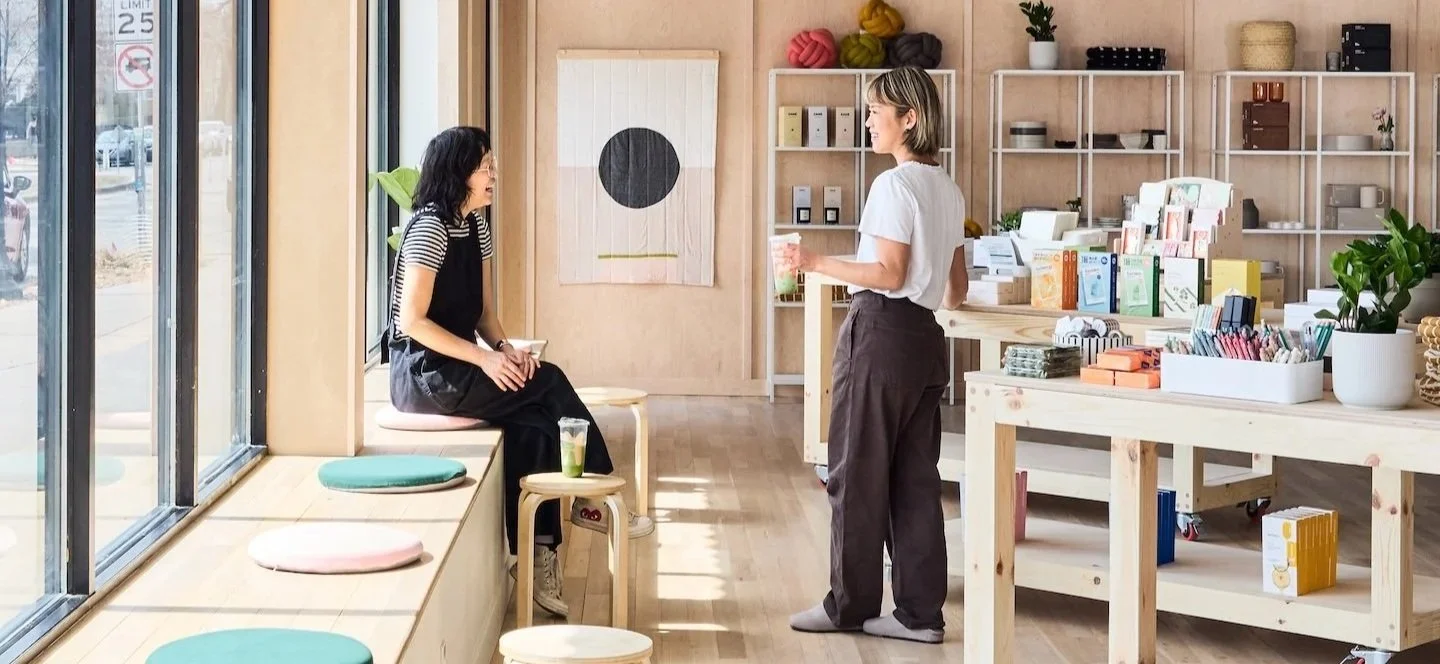
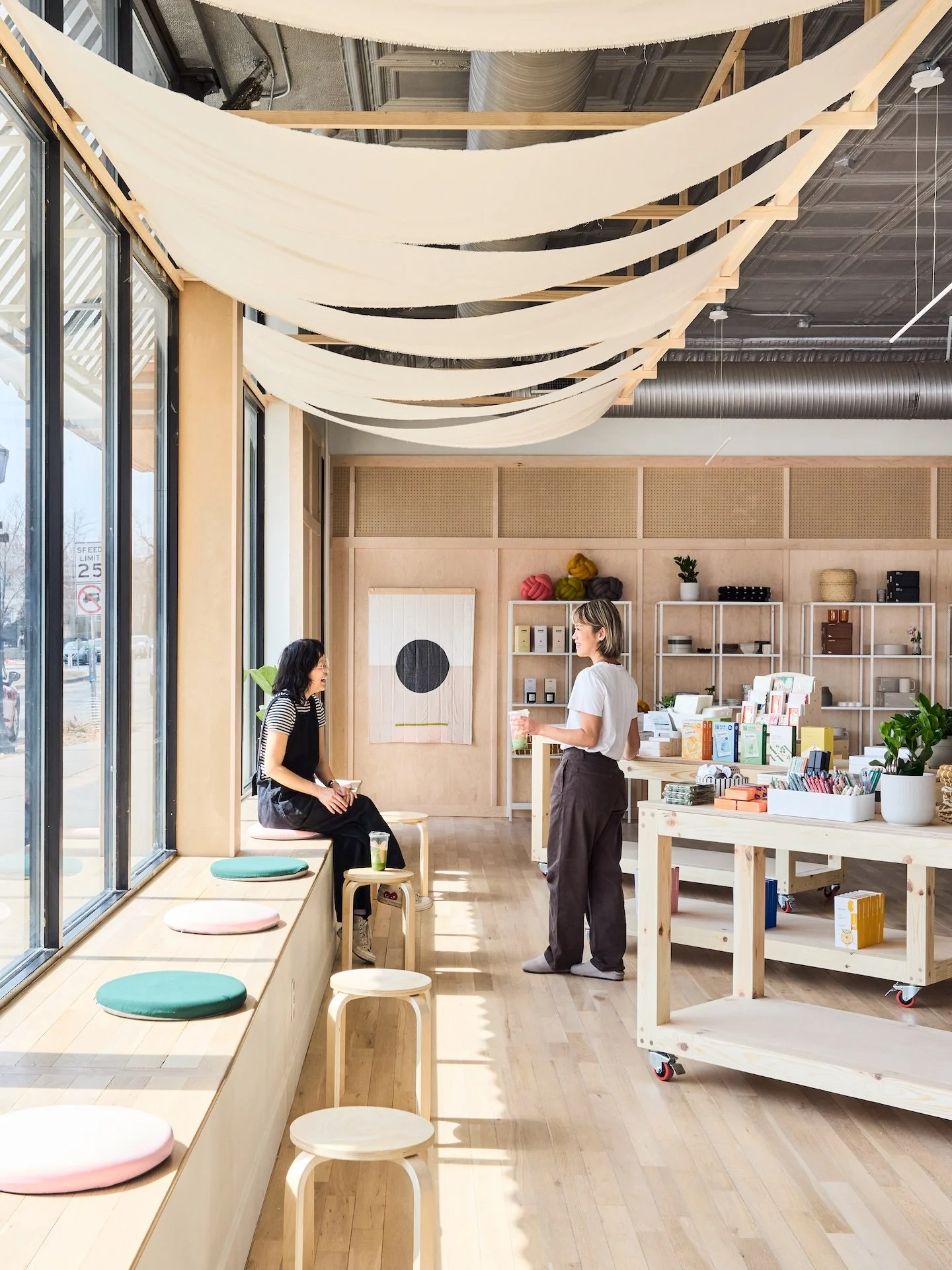
Photo by Wing Ho
A thoughtful reimagining of a former stationery store in Uptown, Moona Moono is more than a café or retail space—it’s a tactile experience rooted in Asian design and discovery.
For decades, the corner of 31st and Hennepin has been home to the city’s buzziest restaurants and retail, including one of the city’s first streetcar stops, the iconic Lucia’s, and two of Ann Kim’s most delicious dining concepts. When the national brand Paper Source closed its doors in early 2024, as a longtime Uptown resident, I was curious what might fill the expansive space next.
Enter: Moona Moono. Instead of giftable-packed displays covering the storefront’s expansive windows, you’ll now see people sitting on the cozy window benches, sharing a matcha and swapping their new favorite Korean snacks. On a bustling weekend, you’ll likely also see a line that snakes around the space (and sometimes out the door), which is a welcome sight on this ever-changing corner in Minneapolis.
Opening their doors in April as the city emerged from the great thaw, Moona Moono is a modern coffee shop and retail experience that celebrates Asian and Asian American culture. The community hub was beautifully designed in partnership with Keep, a local architecture and interior design practice founded by partners Austin and Kotono Watanabe. The husband-and-wife team—he an architect, she an interior designer—approach every project with a shared lens: design that honors the existing, prioritizes small-scale impact, and invites human connection. Just months after opening, Moona Moono was awarded an AIA Minneapolis Merit Award for the team’s architectural storytelling and spatial transformation.
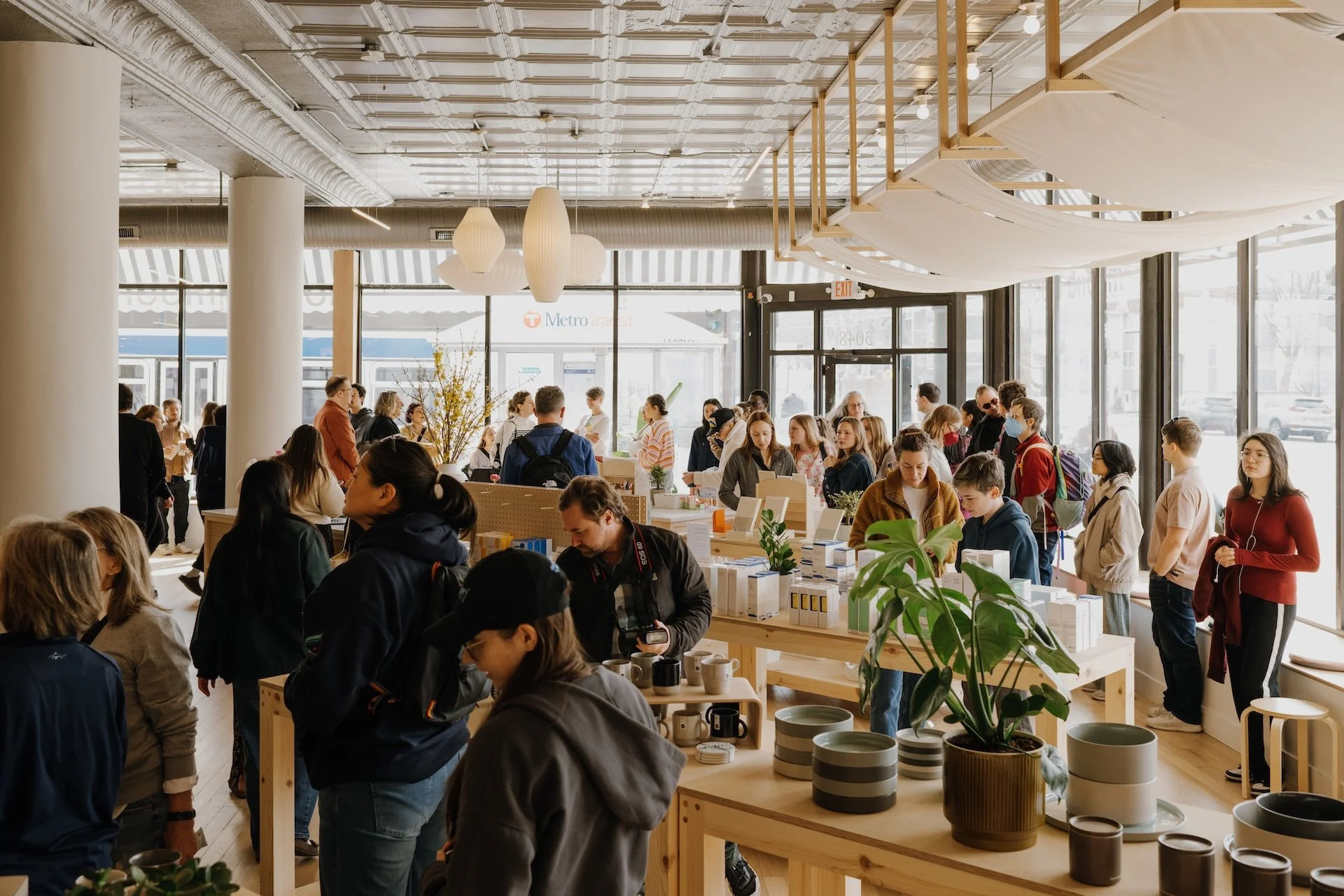
Photo by Roy Son
Founder Angie Lee admitted that when she moved to Minnesota three years ago from Brooklyn, she was surprised that the Twin Cities didn’t have the same retail spaces that celebrated Asian culture that she’d seen in New York. “I built my career in branding and marketing, traveling frequently to Korea for my clients. Over the years, I saw a shift in more trends originating from Eastern culture, with phenomena like K-pop and Korean skincare gaining popularity in the States. There is a misconception that trends on the coasts take years to reach the Midwest, but that simply isn’t true anymore, especially with the internet.”
Moona Moono became her response—a way to introduce and celebrate contemporary Asian products, design, and flavors in a format built around exploration and shared experience.
“There wasn’t anywhere in Minneapolis that felt like this,” said Angie. “I wanted to create a space that didn’t just sell Korean snacks or skincare—the concept is built around discovery and delight. What makes Moona Moono so memorable is the visceral, emotional experience a customer has with other people, and the chance to share that discovery with others.”
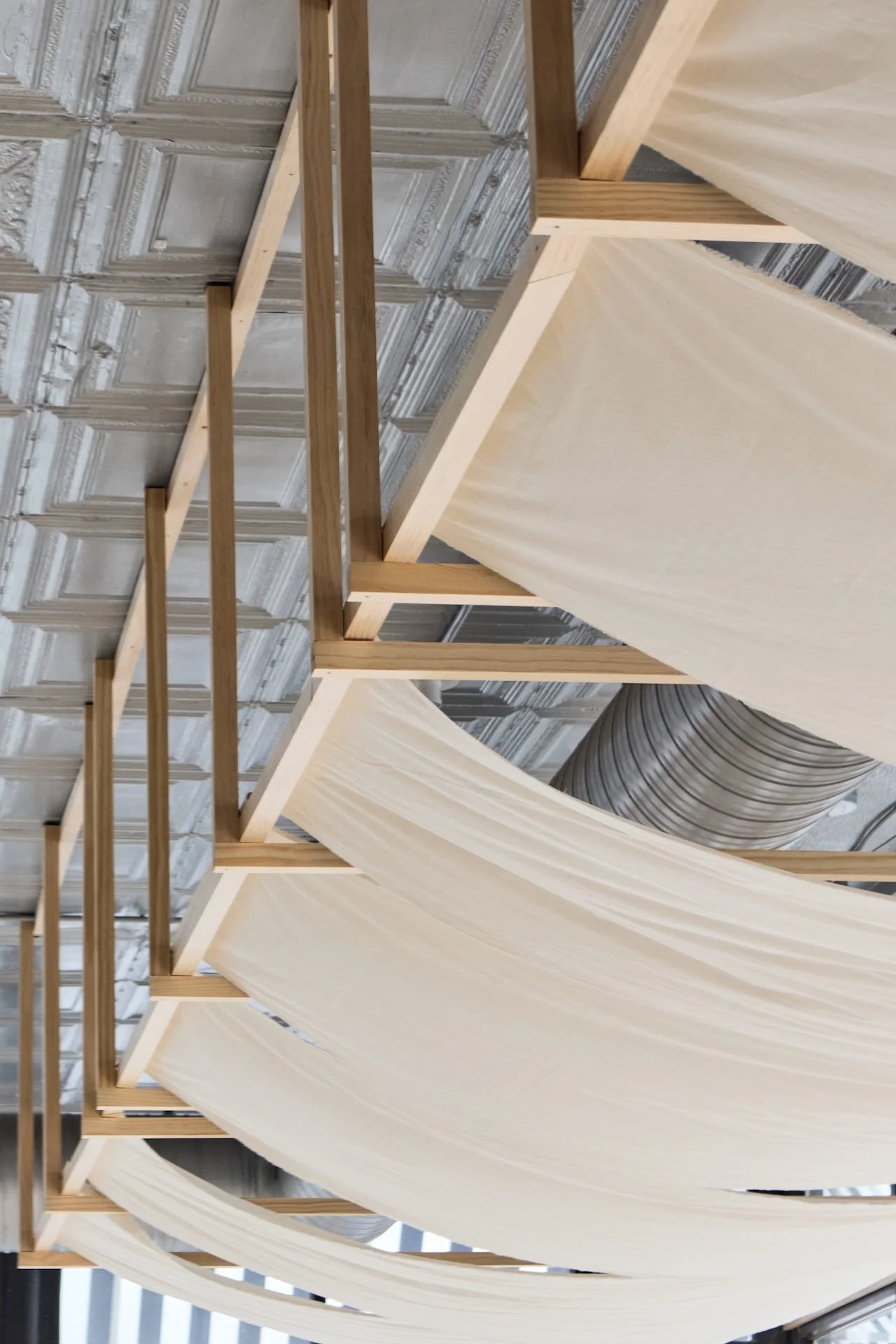
Photo by Wing Ho
“Angie came to us with a clear sense of what she wanted,” said Kotono. “She brought ideas about flow, about the way people should move through the space, and how to balance social and quiet zones. I was born and raised in Japan, so we also bonded over a deeper understanding of Asian and Asian American culture that came through in the design process.”
Kotono’s experience growing up in a small home in Japan influences her design approach today, thoughtfully considering how to maximize every square inch of a space. Austin shares this vision in his architectural process, both emphasizing the use of restraint and sustainability to make the most of what is already there in each of their projects.
“At Keep, we’re drawn to smaller spaces,” said Austin, “and I like to center each project around a singular idea that can be iterated on throughout the space. These tight constraints force clarity and add a level of care to every inch of the project.”
At Moona Moono, the centering idea for the space was repackaging. Imported Asian products are often relabeled to better speak to their consumers in American markets. By meditating on the idea of repackaging, both from a product standpoint and for the physical store, the space honors what was there before while ushering it into the next chapter of introducing Minnesotans to the most celebrated parts of Asian culture.
Details throughout reflect that design philosophy. Pegboard and plywood paneling soften the space and reference packaging elements. A sweeping draped textile ceiling structure designed by Keep not only diffuses light and sound but adds a sense of movement—like an unfurled label. Cabinetry left from the previous tenant was given a facelift, while custom retail tables, designed with Potluck, a local studio, were created with minimal waste in mind, using offcuts from the three main Baltic birch tables to fabricate five additional displays.
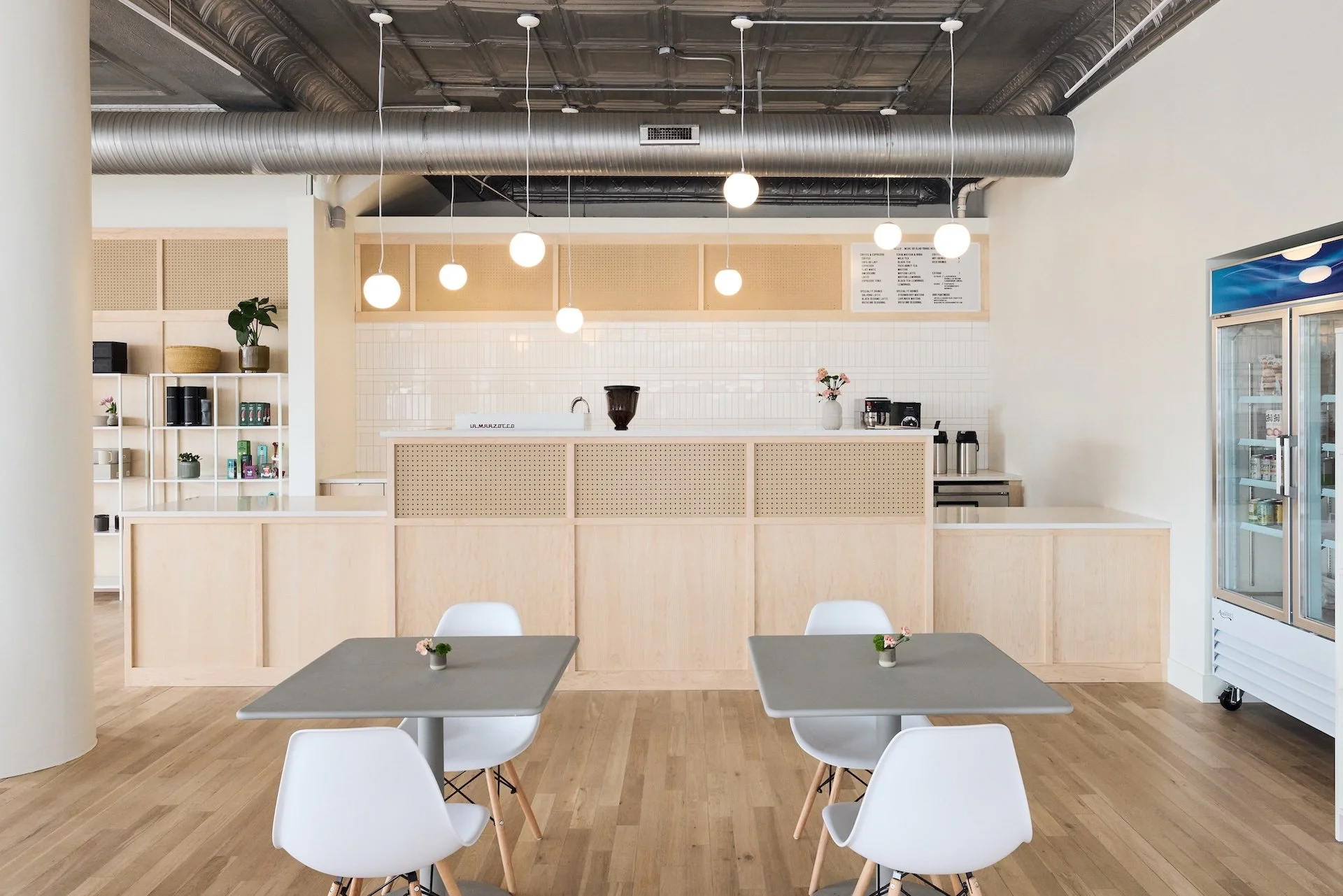
Photo by Wing Ho
The result is a space that balances retail with rest. Open-plan, yet subtly divided through changes in material and texture, it offers cozy window seats, movable tables, and moments of surprise throughout. One of Angie’s design inspirations—the tiled subway walls of Seoul—appears behind the coffee counter. Elsewhere, Kotono incorporated details like noren-style curtains that subtly nod to traditional Japanese design.
Rather than packing the space with product, Moona Moono is intentionally selective. “People don’t want more things,” Angie said. “They want better things. They remember discovering something special—not sorting through hundreds of options.”
That focus on curation and connection is what sets Moona Moono apart. Decidedly not selling products online, Angie shares that, “We focus on experience. We focus on in-person, and we focus on Uptown.”
For Keep, the project was a shift from their portfolio of residential spaces, both in square footage and foot traffic. “It was so rewarding to see how this project brought the community together,” said Austin, “and seeing so many people interact with something we designed, moving through the space exactly how we’d hoped, was really special.”
With thoughtful repackaging and layers of storytelling, Moona Moono connects the traditions and trends ofAsian culture to a community of locals hungry to discover something new. This isn’t just a new cafe in Uptown, it’s an opportunity to linger, learn, and look again.

Emma Geary
Emma is Collective Magazine’s Editor-in-Chief and LAB’s Brand + Editorial Manager. She loves getting lost in a story and is sharing her own on her Substack, Hot Girl Walk. Find her staring at the sun on her daily lap around Lake of the Isles.